Indias New AI Budget 2026-2027
Sohel
February 2, 2026
4 min read
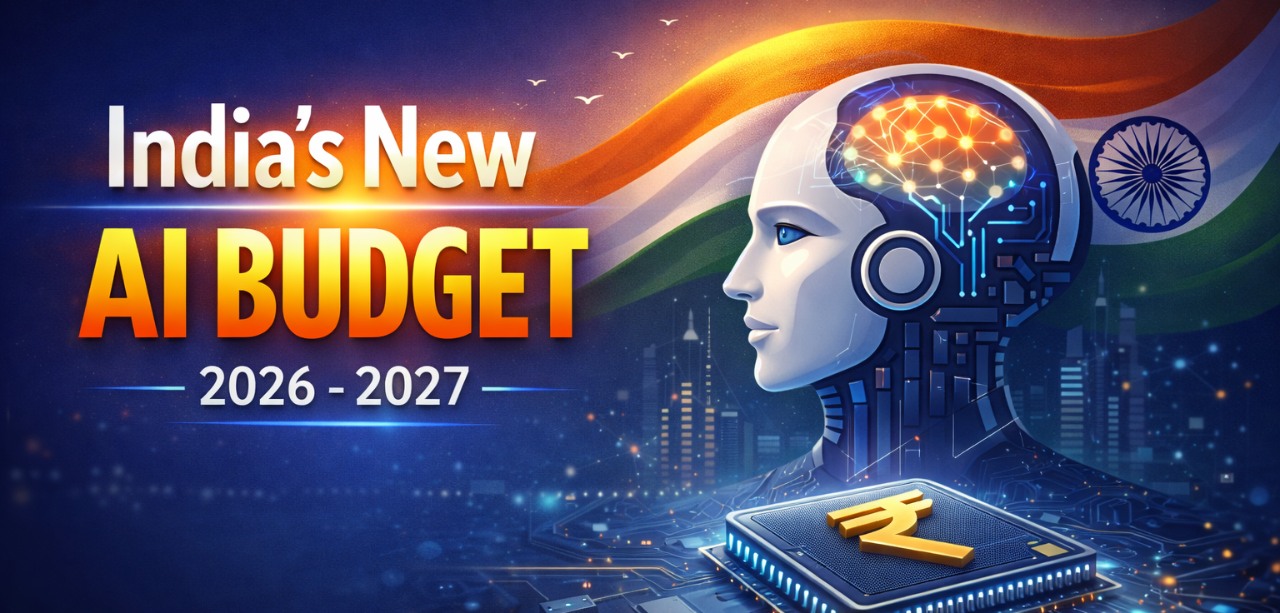
Finance Minister Nirmala Sitharaman’s Union Budget 2026-27, presented on February 1, 2026, marks a turning point for India’s creative and technology sectors. With 11 mentions of AI and a historic focus on the “Orange Economy,” this budget reshapes how advertising, content creation, and digital marketing will operate in India.
The government allocated ₹1,000 crore to the IndiaAI Mission with a clear vision: “Make AI in India and Make AI work for India.”
What This Means for Agencies:
The budget’s biggest win for creative professionals is the massive push for India’s AVGC (Animation, Visual Effects, Gaming, and Comics) sector.
Key Allocations:
The Orange Economy includes animation, VFX, gaming, advertising, music, design, and digital content. Gaming revenue alone hit ₹23,200 crore in 2024, while animation and VFX contributed ₹10,300 crore. India’s creator economy is projected to grow at 18% annually, reaching ₹34 billion by 2026.
Digital advertising now represents one-third of India’s advertising revenue. This budget supercharges that growth with infrastructure and talent.
Three Major Benefits:
1. Access to Trained Talent
15,000 schools and 500 colleges will produce professionals trained in industry-standard animation, VFX, and digital storytelling from day one.
2. Cost Advantage
India’s animation and VFX costs are 40-60% lower than Western markets, with a skilled workforce of 260,000 creators. Budget investments will make services even more competitive.
3. AI-Powered Tools
Expect practical AI applications for:
Indian studios already contribute to global hits like Avengers: Endgame, The Jungle Book, and Frozen. The budget shifts focus from just servicing international clients to building Indian IP that competes globally.
Immediate Benefits:
The budget’s AI focus enables:
Bharat-VISTAAR Model: This multilingual AI platform shows the government’s commitment to localised AI, enabling hyper-localised ad copy, cultural context-aware creativity, and regional sentiment analysis.
Data Infrastructure: With USD 160 billion in data centre investments, expect robust analytics for consumer behaviour and campaign performance.
The budget addresses India’s “theory-practice gap” in creative education by integrating industry workflows, AI tools, and production standards from secondary school onwards.
Decentralisation: AVGC talent hubs will emerge in Tier II and III cities, giving agencies access to fresh perspectives and competitive rates beyond Mumbai, Bangalore, and Delhi.
1. Invest in AI Skills
Upskill your team in AI-powered design tools, copywriting assistants, automated video editing, and data analytics platforms.
2. Partner with Educational Institutions
Build relationships with the 15,000 schools and 500 colleges to create internship programs and talent pipelines.
3. Migrate to Cloud
Leverage tax benefits to move rendering, storage, and computing to the cloud for significant cost savings.
4. Create Your Own IP
Move beyond client briefs to develop branded content, original shows, games, or digital products.
5. Prepare for Workforce Evolution
A High-Powered Committee will assess AI’s impact on jobs and skills. Be ready to reskill your team as AI automates routine tasks.
The media and entertainment sector stands at ₹2.5 trillion, driven by rising incomes, wider internet penetration, and strong demand. The government’s AI Mission, National Quantum Mission, and R&D funds are building a comprehensive innovation ecosystem.
Additional Support:
READ ALSO:- How Coca-Cola Uses AI to Create High-Performing Ad Campaigns
The Economic Survey 2025-26 stresses the need to build India’s own AI solutions for data sovereignty and competitive advantage. For advertising agencies, this means operating in an ecosystem that actively encourages and supports local innovation.
The infrastructure is being built. The talent is being trained. Tax incentives are in place. India’s goal: securing 10% of the global services market by 2047.