What is AI in Marketing?
Sohel
November 12, 2025
15 min read
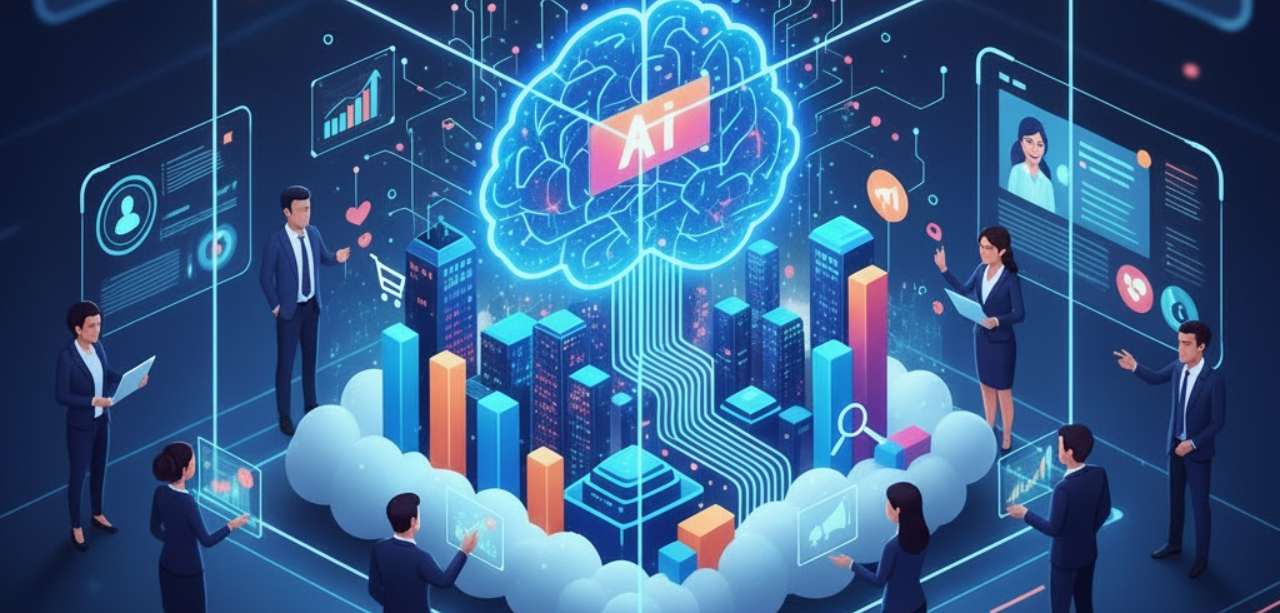
Artificial intelligence has moved from buzzword to business essential in marketing. 88% of marketers now use AI in their day-to-day roles, and the numbers tell a compelling story: the AI marketing industry reached $47.32 billion in 2025 and is projected to exceed $107 billion by 2028.
But what does “AI in marketing” actually look like in practice, and why has it become the non-negotiable baseline for business survival in 2025? This comprehensive guide demystifies the core technology and provides a roadmap for shifting from experimental pilots to high-impact, scalable applications that drive real-world growth.
AI in marketing is the strategic integration of machine learning, natural language processing (NLP), and predictive modeling to optimize brand performance. By leveraging these technologies, businesses can synthesize vast datasets into actionable intelligence—enabling a level of speed, accuracy, and scalability in decision-making that far exceeds traditional human capacity.
AI marketing platforms can analyze data faster than humans using ML algorithms and recommend actions that are informed by sentiment analysis from historical customer data. This capability transforms how businesses understand and engage with their audiences.
Modern AI marketing relies on several key technologies working together:
Machine Learning (ML): Algorithms that learn from data patterns to predict future outcomes and optimize marketing decisions automatically.
Natural Language Processing (NLP): Technology that helps computers understand, interpret, and generate human language, powering chatbots and content creation tools.
Predictive Analytics: Systems that analyze historical data to forecast customer behavior, campaign performance, and market trends.
Computer Vision: AI that processes visual content, enabling automated image recognition, video analysis, and visual search capabilities.
These technologies combine to create intelligent systems that continuously learn and improve, making marketing more effective with each interaction.
The adoption of AI in marketing isn’t just a trend—it’s a fundamental shift in how businesses operate. Nearly all marketers surveyed reported using AI tools, specifically AI writing tools or content creation tools, indicating that AI has become standard practice rather than experimental technology.
Businesses that embrace AI marketing gain significant advantages over competitors who don’t. According to the IBM Institute for Business Value’s annual CEO study, over 70% of the highest performing executives surveyed believe that competitive advantage depends on having the most advanced generative AI.
The competitive edge manifests in several ways:
The financial impact of AI marketing is substantial and measurable. Organizations implementing AI marketing solutions consistently report improved return on investment across multiple metrics:
93% of marketers create content faster and 81% boost brand awareness and sales with AI, demonstrating tangible business outcomes beyond efficiency gains.
AI touches nearly every aspect of modern marketing. Understanding these applications helps businesses identify where AI can deliver the most value for their specific needs.
Optimizing content is the leading use case for artificial intelligence tools, with over half (51%) of marketing teams using AI to optimize content. This includes everything from SEO keyword optimization to rewriting content for different audiences and platforms.
Generative AI tools now create blog posts, social media captions, email subject lines, product descriptions, and even video scripts. However, the most successful marketers use AI as a collaborative tool rather than a replacement for human creativity. AI handles first drafts and variations while humans refine, strategize, and ensure brand alignment.
AI helps businesses intelligently and efficiently divide up their customers by various traits, interests and behaviors, leading to enhanced targeting and more effective marketing campaigns. Instead of broad demographic categories, AI identifies micro-segments based on behavior patterns, preferences, and predicted future actions.
This granular segmentation enables hyper-personalized marketing that speaks directly to individual customer needs and preferences, dramatically improving engagement and conversion rates.
AI can help by performing predictive analytics on customer data, analyzing huge amounts in seconds by using fast, efficient machine learning algorithms. This capability allows marketers to anticipate customer needs, identify at-risk customers before they churn, and forecast campaign performance before spending the budget.
Predictive analytics transforms marketing from reactive to proactive, enabling businesses to stay ahead of customer needs and market trends.
AI-powered chatbots have evolved far beyond simple FAQ responders. Today, generative AI-powered assistants can interact with customers in natural language, no matter where they are on their customer journey, helping to resolve tickets quickly and increasing customer satisfaction.
Modern AI assistants handle complex queries, process transactions, provide personalized recommendations, and seamlessly escalate to human agents when needed—all while gathering valuable data about customer preferences and pain points.
AI revolutionizes email marketing by optimizing send times, personalizing content for each recipient, generating subject lines, and predicting which subscribers are most likely to engage. Some platforms even identify the optimal frequency for each individual subscriber, ensuring maximum engagement without overwhelming inboxes.
AI significantly enhances organizations’ abilities to conduct programmatic advertising by using customer history, preferences and context to deliver more relevant ads with higher conversion rates. AI systems automatically bid on ad placements, optimize budgets across channels, and adjust creative elements in real-time based on performance.
This automation ensures marketing dollars are spent on the most effective placements and audiences, maximizing return on ad spend.
AI tools monitor brand mentions across social platforms, analyze sentiment in customer comments, identify trending topics relevant to your brand, and even suggest optimal posting times for maximum engagement. Sentiment analysis uses AI to evaluate customer opinions and emotions as expressed through social media, online reviews and customer feedback.
AI agents continuously collect and analyze data, often powering personalized recommendation engines on e-commerce sites by tracking user activity and generating products an individual is most likely to buy. These recommendation engines account for billions in additional revenue for e-commerce businesses.
Beyond product recommendations, AI enables dynamic pricing, personalized search results, visual search capabilities, and customized landing pages that adapt to individual visitor preferences.
While the statistics about AI adoption are impressive, the real story lies in the concrete benefits businesses experience when implementing AI marketing strategies effectively.
AI enables personalization at a scale previously impossible. Using AI in marketing can help you create content that reflects different cultural perspectives, making your messaging inclusive and accessible to a broader audience. Customers receive relevant content, timely recommendations, and seamless experiences across all touchpoints.
This level of personalization builds stronger customer relationships, increases loyalty, and drives repeat purchases. When customers feel understood and valued, they’re more likely to become brand advocates.
AI automates repetitive tasks, freeing up marketer’s time to focus on high-value tasks and innovation. This shift allows marketing teams to operate more strategically rather than getting bogged down in manual data entry, report generation, and routine optimizations.
The efficiency gains compound over time as AI systems learn and improve, requiring less human intervention while delivering better results.
Modern marketing generates massive amounts of data that humans cannot possibly analyze manually. Digital campaigns generate more data than humans can keep up with, which can make measuring the success of marketing initiatives difficult. AI transforms this data overload into actionable insights.
AI-enhanced dashboards help marketers connect specific tactics to business outcomes, understanding exactly what drives results and what needs improvement. This visibility enables continuous optimization and smarter budget allocation.
The ultimate benefit of AI marketing is its impact on the bottom line. The better you’re able to target your customers, gain insights from data, and improve your operational efficiency, the easier it is to generate a significant ROI and grow your bottom line.
Businesses using AI marketing consistently report higher conversion rates, increased average order values, improved customer retention, and lower acquisition costs—all contributing to stronger financial performance.
Perhaps AI’s most transformative benefit is enabling businesses to scale marketing efforts without proportionally increasing headcount or budget. AI systems handle increased volume efficiently, whether that’s analyzing more data, personalizing more customer interactions, or optimizing more campaigns simultaneously.
While AI offers tremendous benefits, successful implementation requires navigating several challenges that can derail projects or limit effectiveness.
AI-driven solutions are only as strong as the quality of the data they are trained on. Poor data quality leads to inaccurate insights and flawed decision-making. Before implementing AI, businesses must ensure their data is accurate, complete, consistent, and properly integrated across systems.
Many organizations struggle with data silos where customer information is fragmented across different platforms. To maximize these tools’ efficacy, businesses typically try to ensure data integration across all platforms and systems, including CRM software, website analytics and sales platforms.
Because AI is trained on personal customer information, the laws surrounding what is usable must be strictly followed. With regulations like GDPR, CCPA, and emerging AI-specific legislation, businesses must implement robust data governance practices.
Transparency about how AI uses customer data builds trust, while violations can result in significant fines and reputational damage that far outweigh any marketing benefits.
Technical expertise is vital for successful AI integration. Many marketing teams lack the data science skills needed to fully leverage AI tools. 71.7% of non-adopters cite a lack of understanding as the main barrier, highlighting the urgent need for education and training.
Organizations must either invest in hiring AI specialists or partner with vendors who can provide the necessary expertise and support.
Many marketers are concerned that AI will kill creativity, especially as more brands use these tools to create AI content. The most effective approach positions AI as an assistive tool that handles routine tasks and generates options, while humans provide strategic direction, creative vision, and emotional intelligence.
AI excels at optimization and efficiency but still requires human judgment for brand strategy, emotional resonance, and ethical considerations.
Integrating AI can change the fundamental nature of an employee’s job. Successful implementation requires change management programs that help teams understand AI’s role, address concerns about job security, and provide training on new workflows.
Resistance from team members who fear AI or don’t understand its value can undermine even the best technical implementations.
Success with AI marketing requires strategic planning and thoughtful implementation. These best practices help businesses maximize benefits while minimizing risks.
Before successfully implementing an AI integration, marketing leaders and stakeholders across an organization typically set well-defined goals. Identify specific problems AI should solve or opportunities it should enable. Clear objectives guide tool selection, implementation approach, and success measurement.
Avoid implementing AI just because competitors are doing it. Focus on genuine business needs and measurable outcomes.
Start small with simple applications and assess the integration’s results. Pilot projects allow teams to learn AI capabilities, identify challenges, and build confidence before committing significant resources.
Successful pilots provide proof of value that justifies expanded investment and helps secure broader organizational support.
Collect all of your siloed data sets in one place and ensure they are readily available for analysis. Quality data infrastructure is foundational to AI success. This includes data collection systems, storage solutions, integration platforms, and governance policies.
The investment in data infrastructure pays dividends across all AI applications and future marketing initiatives.
Use transparent data practices, ensure data privacy compliance, and foster a culture of ethical AI usage. Establish clear policies about acceptable AI use, implement bias detection and mitigation, and create accountability mechanisms.
Ethical AI practices protect both customers and the business while building trust and brand reputation.
Providing training on how AI-driven tools work will inspire you to craft compelling content at scale. Comprehensive training programs ensure teams understand AI capabilities, know how to use tools effectively, and can identify when human judgment is necessary.
Change management addresses concerns, celebrates wins, and helps teams adapt to new workflows and responsibilities.
AI systems improve over time but require ongoing monitoring to ensure they’re meeting objectives and not developing problems. During this step, organizations analyze AI-powered workflows to help ensure that they’re meeting KPI targets, monitor outputs and intermittently feed AI tools new data to improve accuracy.
Regular reviews identify optimization opportunities and ensure AI remains aligned with business goals as markets and customer needs evolve.
While AI handles routine tasks effectively, human oversight remains crucial for quality control, strategic decisions, and maintaining brand consistency. Using AI-powered automation tools for tasks such as data entry, report generation, and email scheduling enables your team to focus on more strategic initiatives and creative campaign ideation.
The most successful AI marketing strategies combine machine efficiency with human creativity and judgment.
AI adoption jumped sharply from 29% in 2021 to 88% in 2025, and this trajectory shows no signs of slowing. Understanding emerging trends helps businesses prepare for what’s next.
The next evolution involves AI agents that can operate independently within defined parameters, making decisions and taking actions without constant human input. These systems will manage entire campaigns from planning through execution and optimization, with humans providing strategic direction and oversight.
92% of businesses now use AI for campaign personalization, but future systems will deliver even more granular individualization. Every customer interaction will be uniquely tailored based on real-time context, historical behavior, and predicted preferences.
AI will move beyond creating content to predicting what content will perform best before it’s created. Systems will analyze market trends, audience sentiment, and competitive landscape to recommend content strategies with the highest probability of success.
As voice assistants and visual search become more prevalent, AI will help marketers optimize for these new search modalities, requiring different approaches than traditional text-based SEO.
With increasing privacy regulations and consumer awareness, AI systems will become more sophisticated at delivering personalization while maintaining privacy. Techniques like federated learning and differential privacy will enable effective marketing without compromising customer data.
While current generative AI focuses heavily on text and images, emerging capabilities for video creation, interactive experiences, and even personalized music will transform content marketing possibilities.
For businesses ready to embrace AI marketing, the path forward involves several key steps:
Assess Current State: Evaluate your existing marketing processes, data infrastructure, and team capabilities to identify where AI can deliver the most immediate value.
Define Success Metrics: Establish clear KPIs for AI initiatives that align with broader business objectives, ensuring you can measure and demonstrate value.
Choose the Right Tools: Select AI marketing tools that match your needs, budget, and technical capabilities. Consider both standalone solutions and AI features within existing platforms.
Build or Partner for Expertise: Determine whether to hire AI specialists, train existing staff, or partner with agencies and vendors who can provide necessary expertise.
Start with Quick Wins: Implement AI in areas where you can demonstrate value quickly, building momentum and support for broader initiatives.
Create a Roadmap: Develop a phased implementation plan that scales AI capabilities over time as your team gains experience and confidence.
Establish Governance: Create policies and processes for ethical AI use, data management, and quality control before problems arise.
READ ALSO:- 20 Best AI In Advertising Examples Of 2025
The economic impact of generative AI is staggering, with McKinsey forecasting an annual contribution of up to $4.4 trillion to the global economy. Within the marketing sector, this technology has officially transitioned from a speculative experiment into a foundational infrastructure, essential for any scalable operation.
The businesses thriving in 2025 are those that view AI as a strategic imperative rather than a nice-to-have capability. They invest in data infrastructure, prioritize ethical practices, continuously train their teams, and balance automation with human creativity.
Success with AI marketing doesn’t require perfect implementation or unlimited budgets. It requires starting somewhere, learning continuously, and adapting strategies based on results. The competitive gap between AI adopters and non-adopters widens every month, making now the right time to begin your AI marketing journey.
Whether you’re just exploring AI possibilities or looking to expand existing capabilities, the fundamental truth remains: AI marketing delivers measurable value when implemented thoughtfully. The question isn’t whether to use AI in marketing—it’s how to use it most effectively to serve your customers and achieve your business goals.