What Is Storyboarding How AI Is Transforming the Process
Sohel
January 16, 2026
3 min read
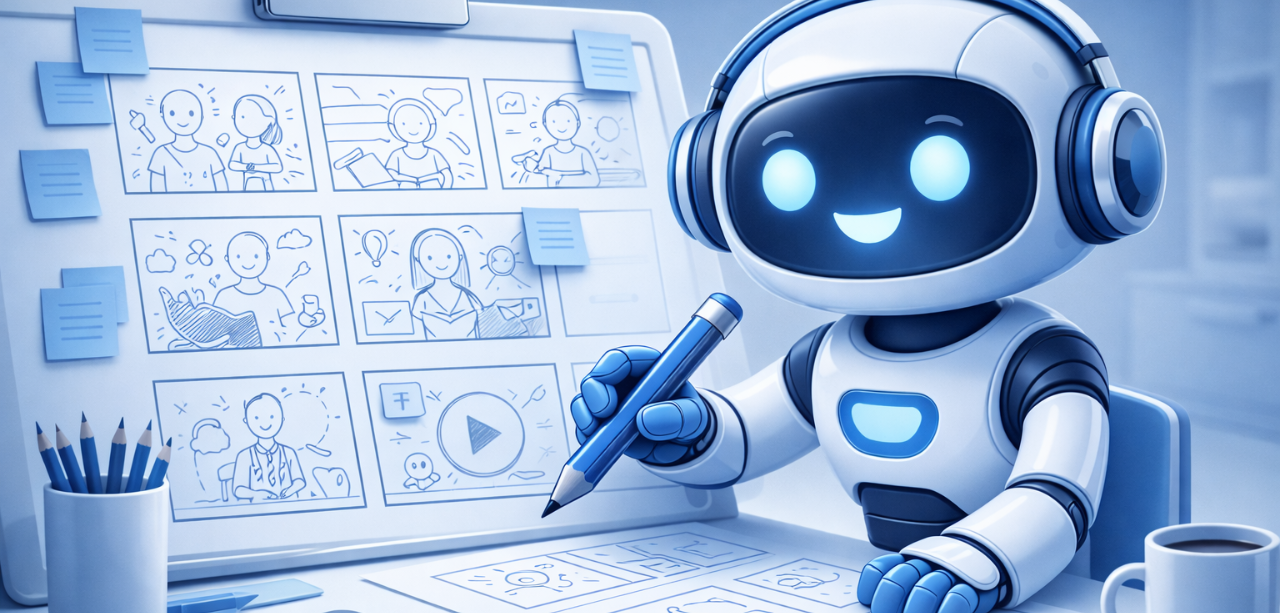
Storyboarding is a visual planning technique that maps out a narrative sequence through illustrated panels or frames. Originally developed by Walt Disney Studios in the 1930s, storyboards serve as blueprints for films, animations, commercials, and other visual projects. Each panel represents a key scene, showing composition, camera angles, dialogue, and action flow.
Think of a storyboard as a comic strip version of your final product—it allows creators to visualize the story before investing in full production.
Traditional storyboarding helps teams:
However, creating storyboards manually is time-consuming. Artists spend hours sketching frames, revising compositions, and iterating on feedback—often requiring specialized illustration skills.
Artificial intelligence is revolutionizing the storyboarding process, making it faster, more accessible, and incredibly efficient. Here’s how:
AI-powered tools can generate storyboard frames in seconds from text descriptions. Instead of sketching each panel manually, creators simply describe the scene—”wide shot of a hero standing on a mountain at sunset”—and AI produces the visual instantly.
AI generates multiple composition options for each scene, allowing directors to compare angles, lighting, and framing without redrawing everything. This rapid iteration accelerates creative decision-making.
Maintaining visual consistency across hundreds of frames is challenging. AI ensures uniform character designs, color palettes, and artistic styles throughout the entire storyboard, eliminating discrepancies.
Advanced AI systems can analyze scripts and automatically generate corresponding storyboard sequences, identifying key moments, emotional beats, and scene transitions without manual intervention.
AI-powered platforms enable real-time collaboration, where team members can comment, suggest edits, and visualize changes instantly—streamlining the feedback loop.
Several platforms are leading this transformation. Dilogs.ai stands out as an innovative solution that leverages AI to simplify content creation and visual storytelling workflows. Tools like these democratize storyboarding, making professional-quality visualization accessible to creators regardless of artistic skill.
Other popular AI storyboarding tools include:
AI won’t replace human creativity—it amplifies it. While AI handles repetitive tasks and generates initial concepts, creative professionals focus on storytelling, emotional depth, and artistic direction. The combination of human vision and AI efficiency creates a powerful workflow.
Expect future developments like:
Ready to transform your workflow? Start by:
Whether you’re a filmmaker, animator, marketer, or content creator, AI-powered storyboarding can dramatically reduce production time while elevating your creative output.
Storyboarding remains essential for visual storytelling, but AI has transformed it from a labor-intensive manual process into an efficient, accessible creative tool. By automating tedious tasks and generating instant visualizations, AI empowers creators to focus on what matters most—telling compelling stories.
Explore platforms like www.dilogs.ai to experience how AI can streamline your creative workflow and bring your visions to life faster than ever before.